



Five days after Israel and the US began the bombing campaign of the regime in Iran many people are still asking "why?". After all, we were told that Iranian nuclear programme was obliterated during the 12-day war last June, that the regime has been set back by years and would need a long time, effort and money to recover.
Even the White House can't seem to clearly state the specific reasons. President Trump is saying that Iran would soon pose a bigger threat and that it would even strike Americans first.
This was in response to a conflicting account given by Secretary of State, Marco Rubio, who claimed that US chose to join Israel, which was planning to attack Iran and finish the job started in 2025, and that Americans were concerned that Iranians would target them in retaliation.
So, was it the US? Was it Israel? The truth is – it was a bit of both.
Rubio likely revealed the ultimate impulse that pushed Trump to act, but it's certainly not the only one.
After all, last year the US military joined Israel only in the closing moments of the war, by sending B2 bombers to obliterate the hardened nuclear enrichment site in Fordow.
And yet, Iranian retaliation was limited and hardly caused any damage to American forces in the region. Why would it be any different this time if the US chose to stay on the sidelines?
It's very likely, however, that Benjamin Netanyahu decided to use the few months he has left in office until the Israeli parliamentary election in October and American midterms in November, which could result in a much more hostile Congress, should Democrats filp the House (and maybe even the Senate), to maximise the damage inflicted on Tehran.
Israelis may have genuinely told the Americans that they would go it alone if they have to, forcing the White House to join in and deal a much bigger blow to the regime than would otherwise have been possible.
Iranian protests throughout December and January provided a good background for the decision, which could otherwise seem out of place. But after local security forces butchered thousands of people protesting in the streets, critics of the American involvement have far less ammunitition and come off as defending an indefensible regime only to spite Trump.
But for all the talk about how bad Khamenei and his band of medieval thugs are, about the crimes they have perpetrated over the years against their own people but also thousands of Americans killed or maimed by Iranian proxies, there's one other reason for Trump's battering of Iran that receives almost no coverage – China.
While Americans often get accused of belligerence due to their global military presence across hundreds of military bases in different countries, Beijing has spent years building a network of its own.
North Korea, Iran, Venezuela, Russia and even Mexican cartels smuggling tons of lethal drugs into America, have all received Chinese support precisely to undermine the United States, without directly embroiling Beijing in any conflict they get themselves into.
While they don't usually take orders from Beijing, they don't have to, because they typically serve their purpose without direction. China just helps them operate.
The crazy, nuclear-armed dictatorship of the Kims in Pyongyang keeps Americans and their allies, South Korea and Japan, on high alert, binding them in the Far East.
Russian war in Ukraine has cost the West hundreds of billions of dollars and euro, leading to cracks in NATO and tying a good chunk of their militaries to address the persistent threat from Moscow.
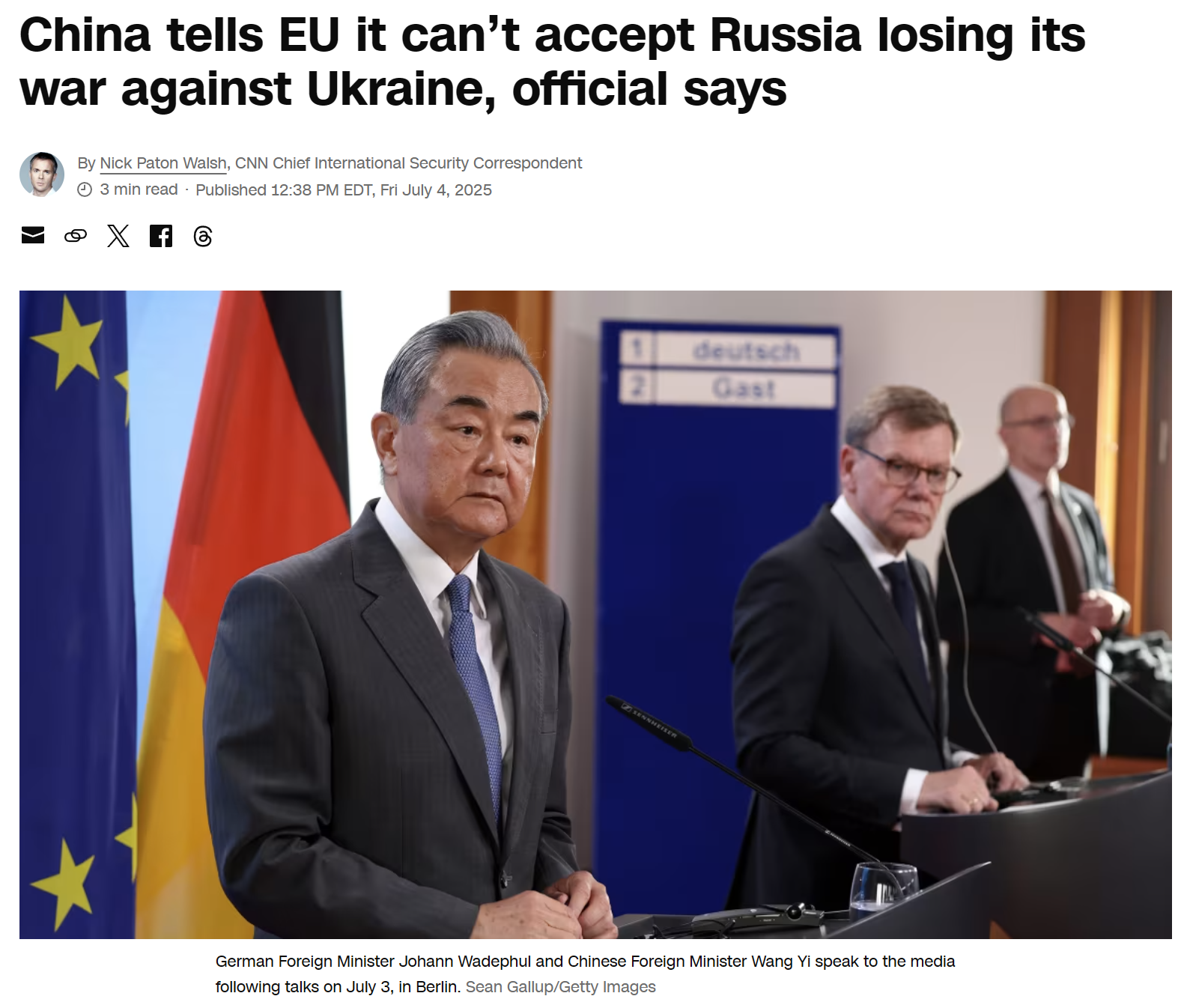
"Chinese Foreign Minister Wang Yi told the European Union’s top diplomat that Beijing can’t accept Russia losing its war against Ukraine as this could allow the United States to turn its full attention to China."
Venezuela was China's anchor in Latin America, while contributing to the immigration crisis in the US as well as drug smuggling which had a two-pronged effect. On the one hand, it fed socially corrosive American addiction to narcotics, and on the other provided a vital source of money to proxies used by Iran to threaten the Middle East – chiefly Hezbollah.
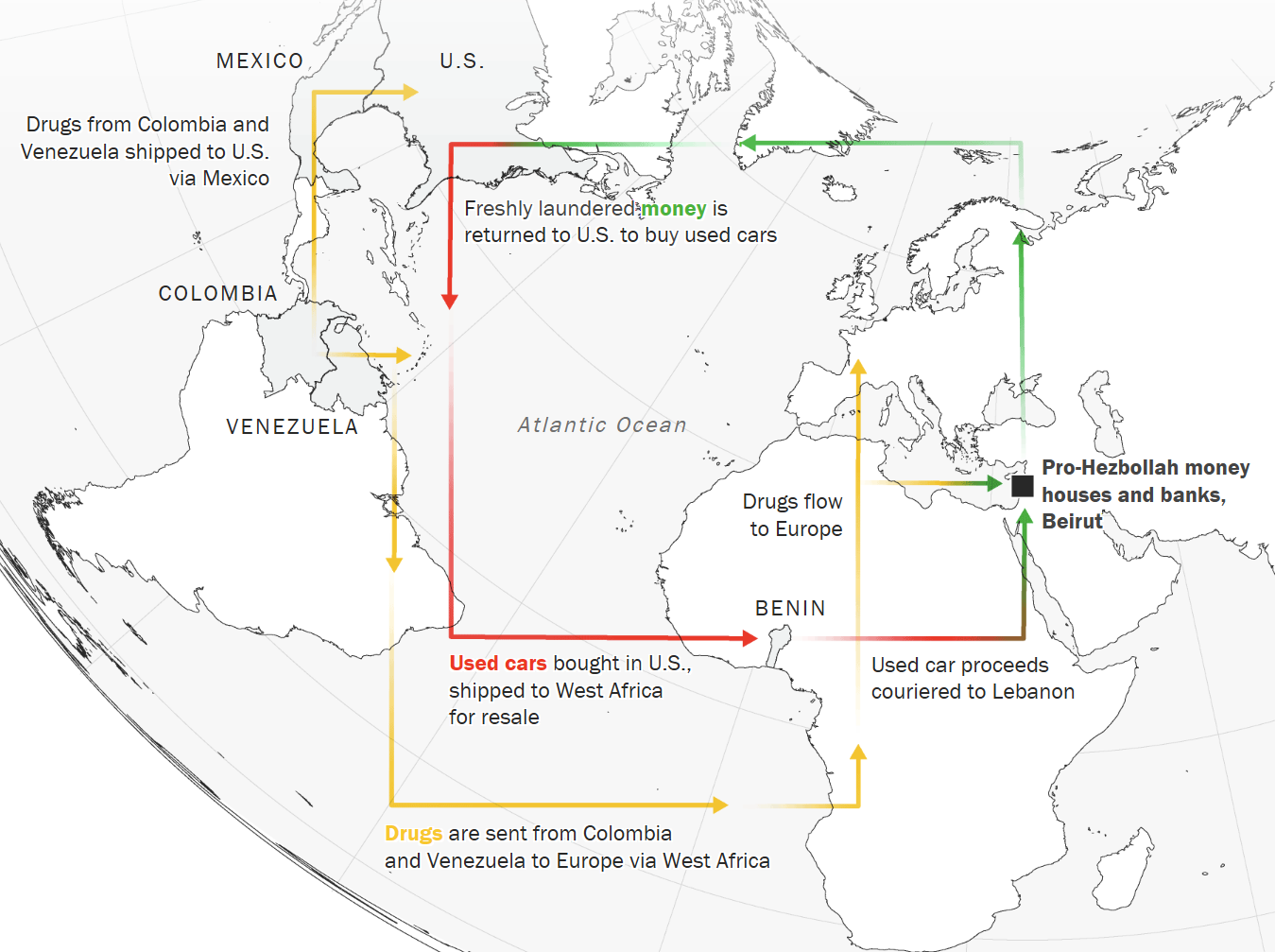
"In Venezuela, President Hugo Chavez was personally working with then-Iranian president, Mahmoud Ahmadinejad, and Hezbollah on drug trafficking and other activities aimed at undermining U.S. influence in the region, according to interviews and documents. Within a few years, Venezuelan cocaine exports skyrocketed from 50 tons a year to 250, much of it bound for American cities, United Nations Office of Drugs and Crime statistics show."
Finally, Iran itself is a giant missile carrier right in the heart of the Middle East. With over 90 million people it's far more populous than all of its Gulf Arab rivals combined (at just under 30 million of native citizenry). It has been openly hostile to the US for half a century, controls the critical Straits of Hormuz and has been an existential threat to Israel, Washington's key ally.
After the US dealt with international terrorism and the regime change in Iraq, Iran is the main reason for the substantial American presence in the Gulf. If the theocracy imploded and was replaced with a civilised government allied to Washington, China would lose all regional influence and have to start paying market rates for the ca. 15% of all oil it imports, which comes from Iran today.
Most importantly, the fall of the regime would free up the US military to focus on Taiwan.
This is the main objective in Beijing – keeping Americans occupied elsewhere, so they cannot commit too many resources to defending the island or risking direct confrontation with the communist regime.
But after returning to office Donald Trump has taken steps to dismantle this web trying to ensnare his country.
He started with punitive tariffs on China, targeting its exports of fentanyl precusors to Mexico, challenged Chinese ownership of critical ports along the Panama canal, deployed the military to blow up Latin American drug smugglers and, in January, captured Nicolas Maduro in a daring operation carried out by Delta operators just hours after the Venezuelan president met with a Chinese delegation.
In February the Mexican military, with US support, killed the notorious El Mencho, the leader of the Jalisco cartel and most wanted man on both sides of the Rio Grande.
Then, in the final day of the month, Americans joined Israel to strike Iran.
While Iranian theocracy is a threat on its own, given the fundamentalist ideology it has been built on and half a century of hostility towards the Great Satan (USA) and Little Satan (Israel), it is also what has made it so useful to China.
Which is why Beijing has extended a lifeline to the regime, in the form of oil purchases (however deeply discounted) which provide the much needed money. It has also quite a long history of helping Iranian military, even though direct military sales stopped around 20 years ago with the introduction of the first UN sanctions after Iran was found in violation of the nuclear non-proliferation treaty.
Nevertheless, without many dual-use products – like electronic components or chemicals – Iran would not be able to develop ballistic missiles, which it sees as a must-have insurance policy quite regardless of the atomic bomb.
As Marco Rubio explained:
"Why does Iran want that ballistic missile capability? What they are trying to do and have been trying to do for a very long time is build a conventional weapons capability as a shield where they can hide behind, meaning there would come a point where they have so many conventional missiles, so many drones, and can inflict so much damage, that no one can do anything about their nuclear program."
The interceptor problem
The reason Iran's ballistic missile program is so important is that it is far easier and cheaper to build and deploy ballistic missiles than it is to intercept them.
You may have read it in the current news and analysis that US and its allies may be running low on interceptor missiles that are required to rebuff Iranian bombings across the region.
Simply put – if they run out then there's nothing to stop Iranian missiles from hitting their targets.
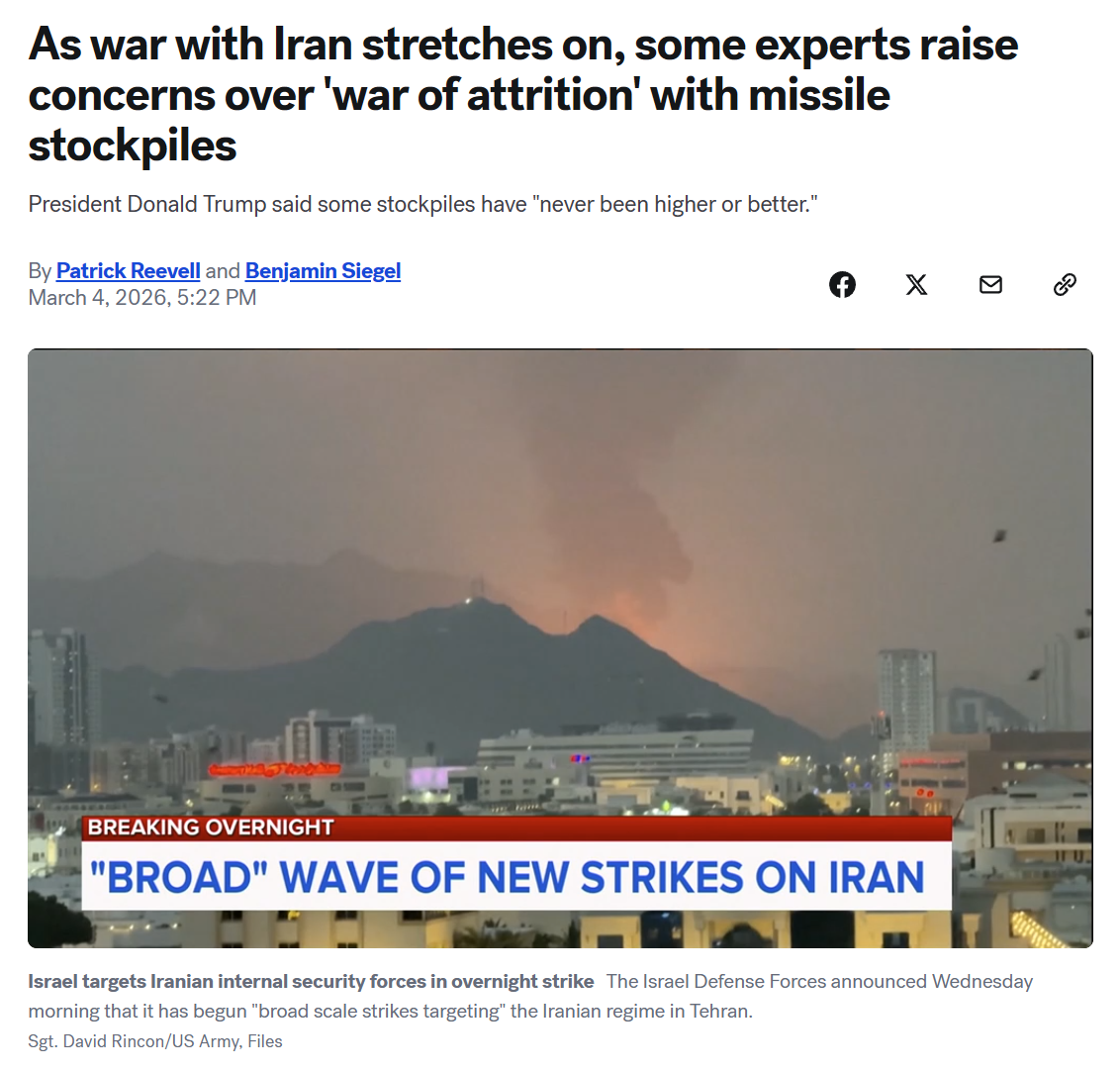
Even a country as rich and powerful as the US produces only 600 Patriot missiles per year and less than a hundred of the more advanced THAAD interceptors, which offer a wider range of protection.
All of them then have to be distributed around the globe, including in sales to US allies.
The reason it is so difficult and costly to make them is the incredible precision that requires advanced tech components for them to work. A ballistic missile can miss by many meters and still cause damage. An interceptor, meanwhile, has to hit a fast moving target directly (or nearly) to destroy it.
As a result there's great assymmetry between what the US can produce (a few hundred interceptors per year) and the number of ballistic missiles even a broke, disorganized country like Iran can produce (a few hundred per month).
Throughout 2025, even before the first war in June, China has shipped thousands of tons of sodium perchlorate, which is a necessary precusor for production of ammonium perchlorate, a sanctioned compound used in missile propellants.
It increased its shipments in the fall, after the UN sanctions snapback mechanism reimposed suspended sanctions on Iran, leading American Congressmen to raise alarm about the deliberate Chinese support for the regime in Tehran.
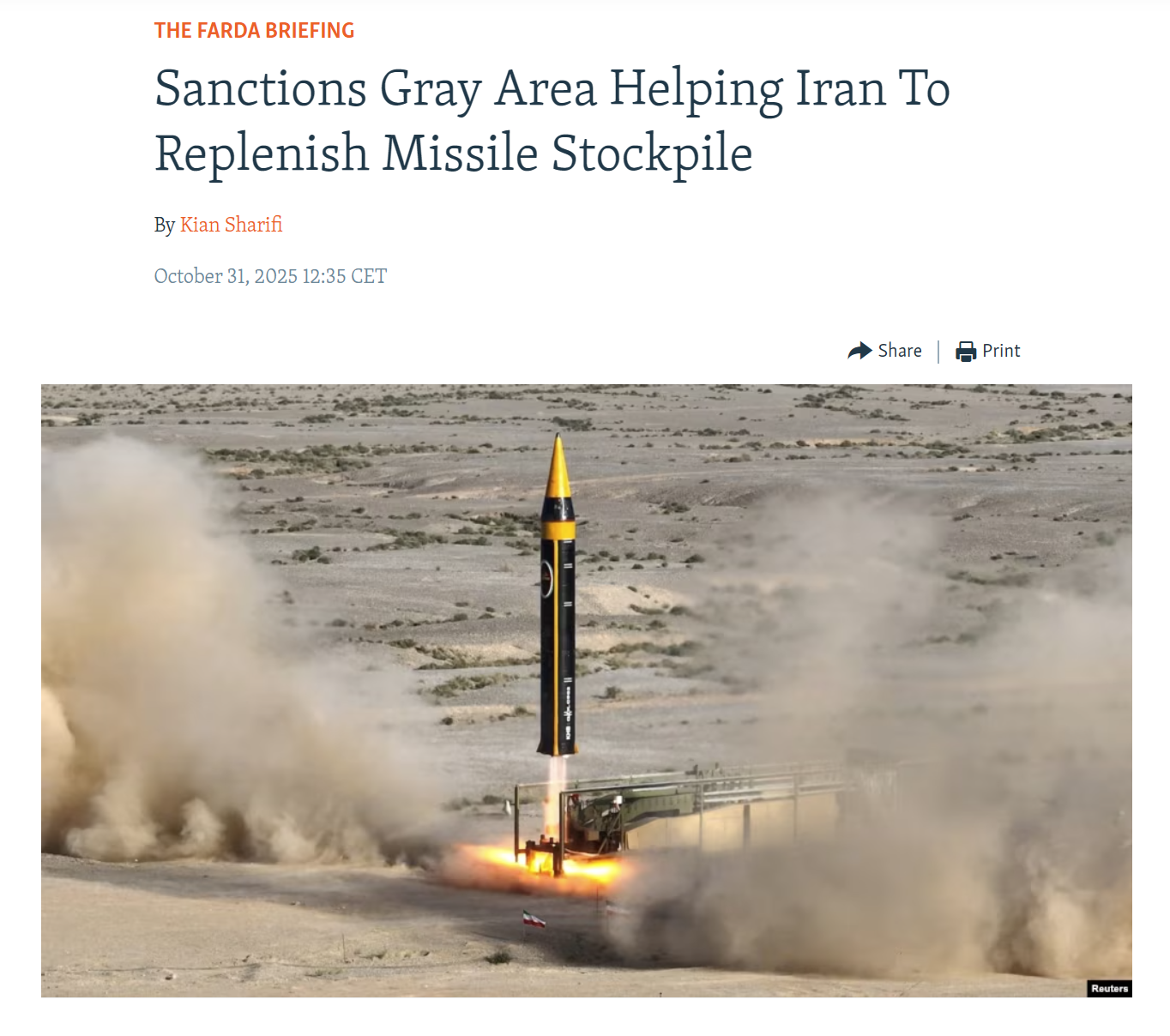
What's more, just last week Reuters reported that Beijing was close to approving a sale of advanced anti-ship missiles to Iran, acquisition of which would radically increase the threat that Tehran could pose to American fleet in the region, including the nation's formidable aircraft carriers.
Beijing's goal was simple – help Tehran rearm at a pace sufficient enough to deter any future American or Israeli intervention, that they would lack the means to deal with due to insufficient stocks of anti-ballistic inventories.
If Iran reached the threshold of several thousand missiles it could comfortably outlast any bombing campaign and flood the military installations housing Americans in the region to the point of rendering them defenceless.
It is not something that US could accept, which is why this time it decided to do more than just help Israel – it amassed enough forces to defang Tehran and force it into compliance.
Even if the regime survives, the destruction of its ballistic missile capabilities would be an even bigger blow than setting back its nuclear program, which still had many hurdles to cross.
Crucially, it would give the US much needed breathing space in the Middle East, so that it can move a greater portion of its military to the Far East to keep China in check – precisely the outcome that Beijing was hoping to avoid.


