



In his trademark, mercurial style, Donald Trump took everybody by surprise – including his allies in Israel – yesterday, announcing that the US and Iran have had productive diplomatic talks and that he postpones his ultimatum to Iran, which would have the US bomb its power plants tomorrow if the Straits of Hormuz is not opened by then.
The news was so unexpected that it was received with global incredulity. Was Trump making things up? How come such a revelation comes after days of escalating rhetoric from both sides and repeated denials by Iranians about holding any talks with Americans during the war?
As I observed in a Facebook post right after the news broke, war is taking place in the media as well.
It was possible that Trump was making things up: either to buy himself and his troops a few extra days before they can be deployed to the region, or to sow suspicion and disunity in Iranian ranks ("Who's talking to Americans?!"). It was also possible that the talks were indeed taking place, either with the regime (publicly seeking to preserve face with continued bluster) or more reasonable people in it seeking to cut a deal.
Regime change was only a dream
The media and Trump's opponents have repeatedly tried to claim the goal of the war started on Feb. 28 was regime change in Tehran and that Trump was either going to fail at that or is already failing.
It's a useful framing for political puposes – allege that your opponent has undertaken an impossible mission that you can then conveniently use against him in an election year, no matter how successful it has actually been on its real aims.
The truth is more nuanced, however – and is supported by what happened earlier this year in Venezuela.
It was communicated in the early days of American-Israeli airstrikes by the US Secretary of State, Marco Rubio, who said that regime change was welcome, of course, but is not a stated goal of the operation.
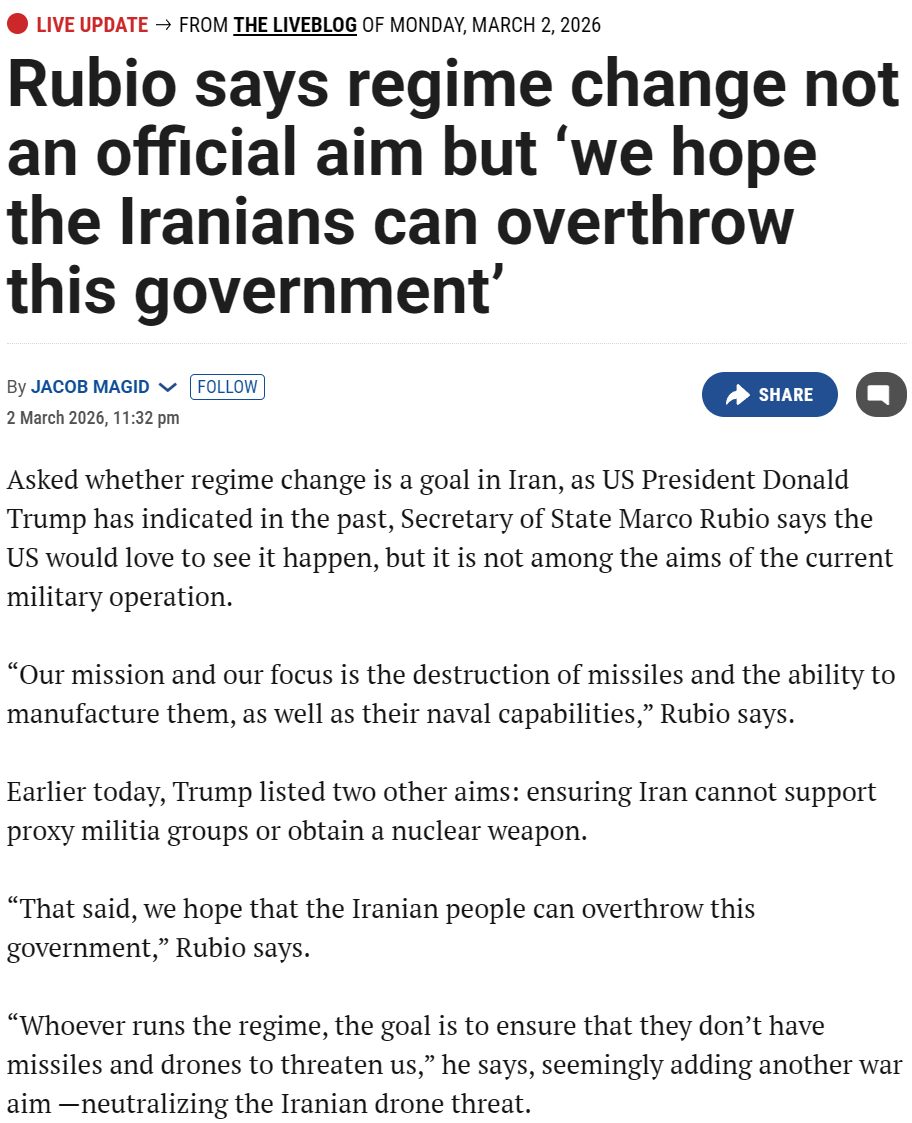
Both Trump and Netanyahu encouraged Iranians to rise against the regime (unsurprisingly), but there was neither a plan nor an expectation that a complete revolution can take place after mere days or weeks of nothing but aerial bombings.
It's also why Trump never publicly backed Reza Pahlavi, the son of the country's Shah deposed in 1979, just like he refrained from supporting democratic opposition politicians in exile from Venezuela.
He has also signalled multiple times that he was looking for someone from within Iranian political scene to talk to, but the strikes were so devastating that all the candidates that Washington had in mind were dead.
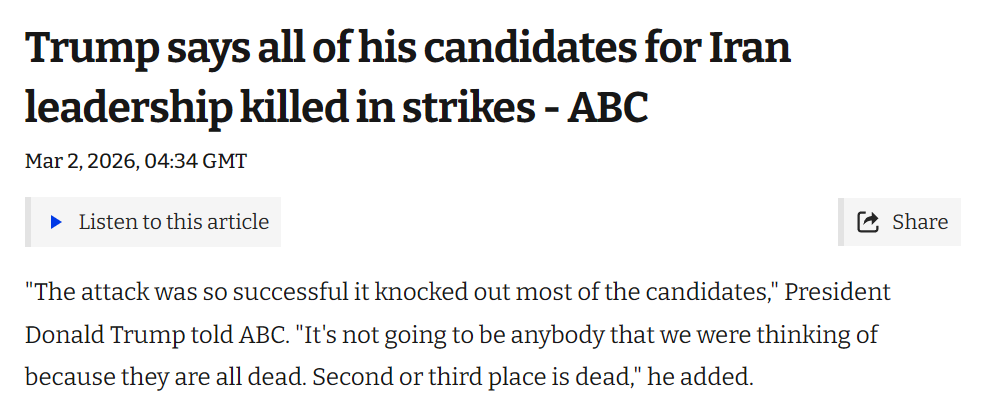
This is a pragmatic approach – likely authored by Rubio – which recognises that a complete destruction of a foreign regime, followed by a transition to a peaceful, democratic alternative, would require extensive military presence on the ground to guarantee the country's stability during the process.
After all, even if you were able to exterminate all the evil men, the outcome would not be peace and order, but anarchy. Somebody has to keep the country running, organize elections, control the judiciary and so on.
Given the lack of American appetite or resources for a ground operation – even in a nearby country like Venezuela – the only alternative is decapitation of the regime and cutting a deal with its shaken remnants.
In Caracas the person that ended up playing this role was Maduro's VP, Delcy Rodriguez.
Initially she acted defiantly, demanding that the US immediately releases Nicolas Maduro and his wife. But it was likely all for show as within weeks she started distancing herself from her former boss and both countries restored bilateral relations earlier this month, with the reopening of the US embassy in the country.
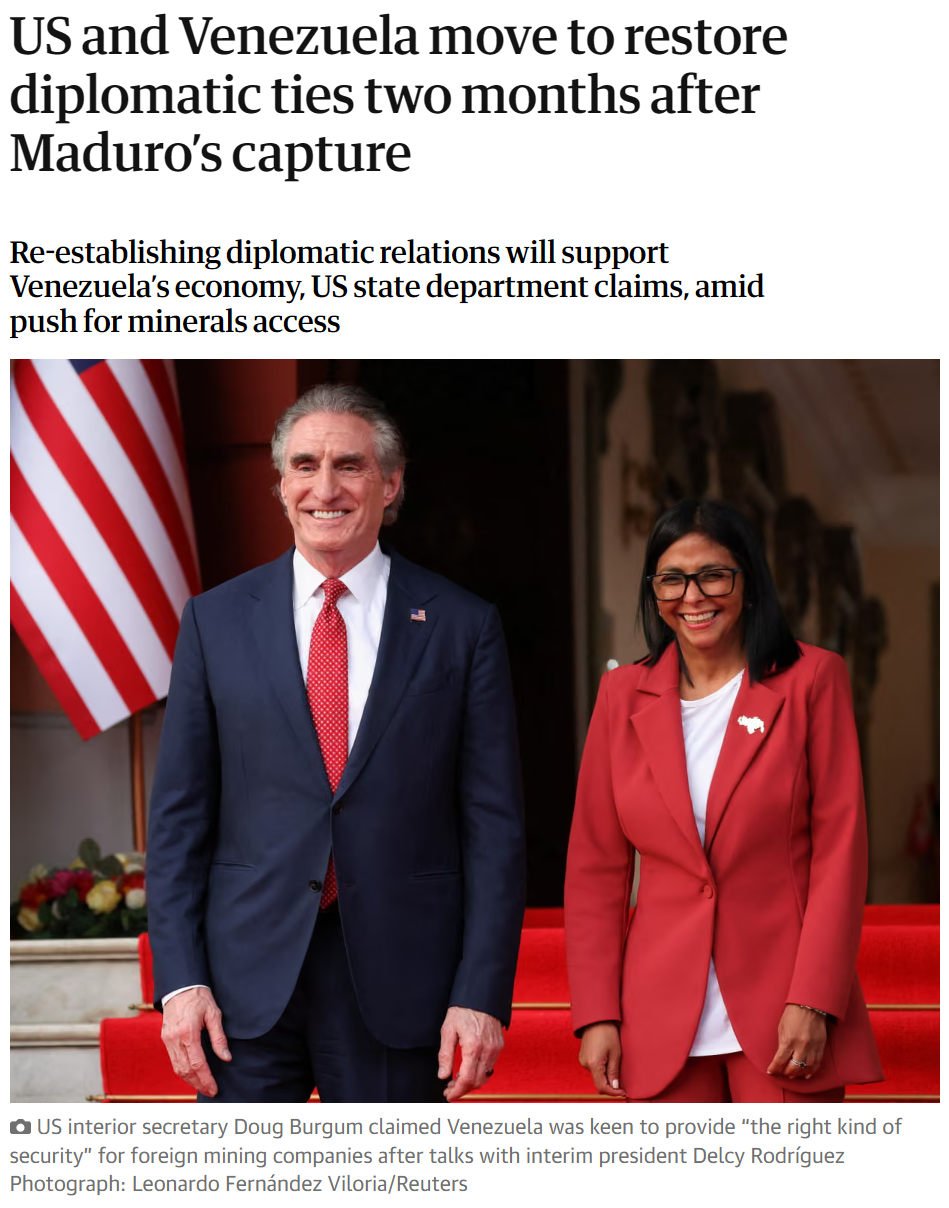
The cooperation appears to be growing closer as just days ago she appointed a new defence minister and replaced senior military leadership:
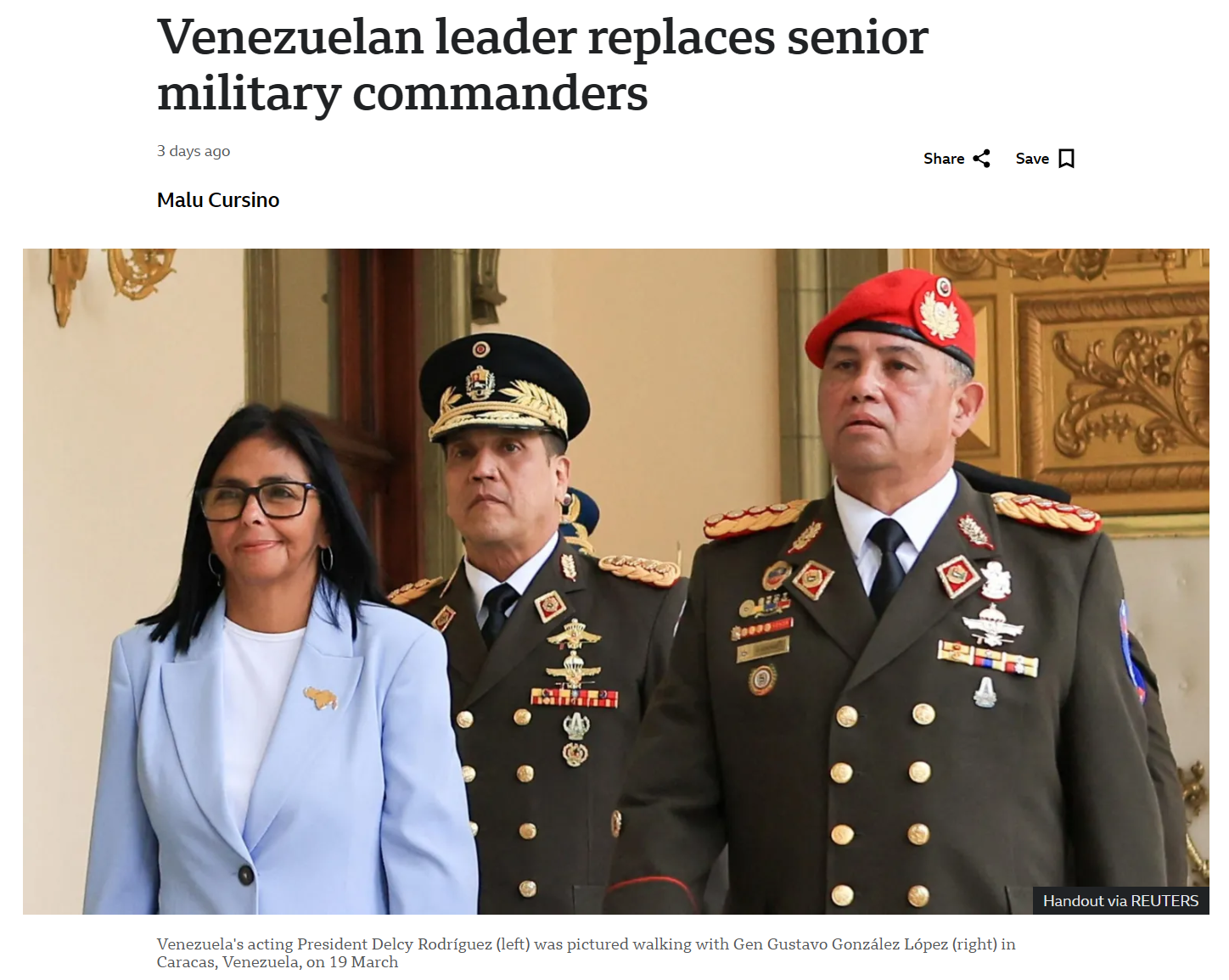
You can perhaps now begin to appreciate the approach practiced by the Trump administration in dealing with geopolitical threats – and understand what its goals in Iran are as well.
Of course, the Islamic Republic, fuelled by religions fundamentalism, for decades sponsoring terror groups around the world and pursuing nuclear weapons, is a tougher nut to crack than a corrupt cartel dictatorship in Latin America, which was a decently functioning democracy as recently as 15 years ago.
However, the fundamental calculation is the same – keep eliminating the leaders until you find someone who doesn't want to feature in the next obituary.
Find the Iranian Delcy Rodriguez, who may bark a bit for show, but won't bite Washington and is going to redirect the country onto more peaceful tracks.
It seems that Trump may have finally found a candidate in the country's parliament's speaker, Mohammad Bagher Ghalibaf.
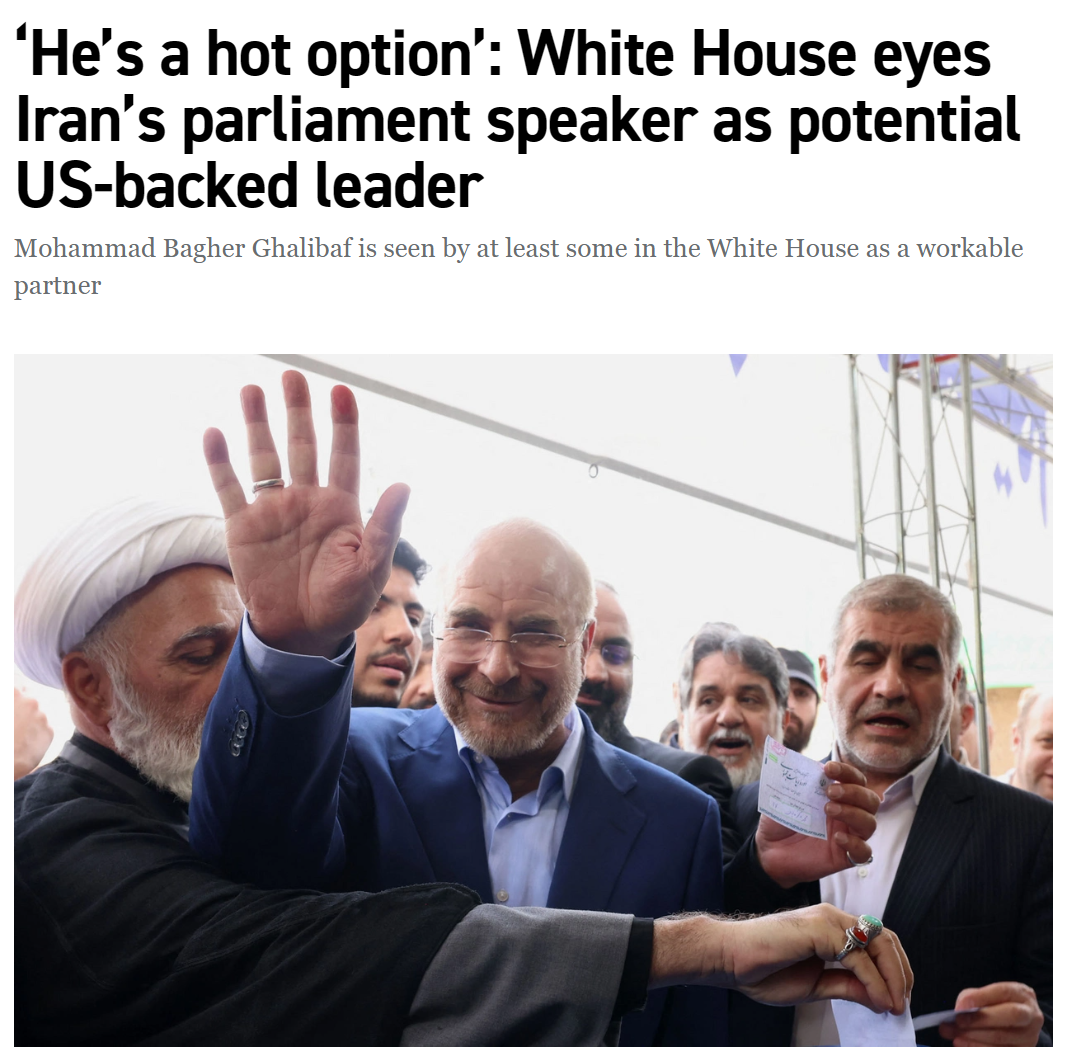
There are many arguments against the man deeply entrenched in the regime, former mayor of Tehran with career in police and military, who didn't shy away from brutal crackdowns on protesting Iranians.
At the end of the day, however, nobody within the Iranian elite is going to have a clean CV and the US wants to find someone who can be influenced – whether by carrot or a stick.
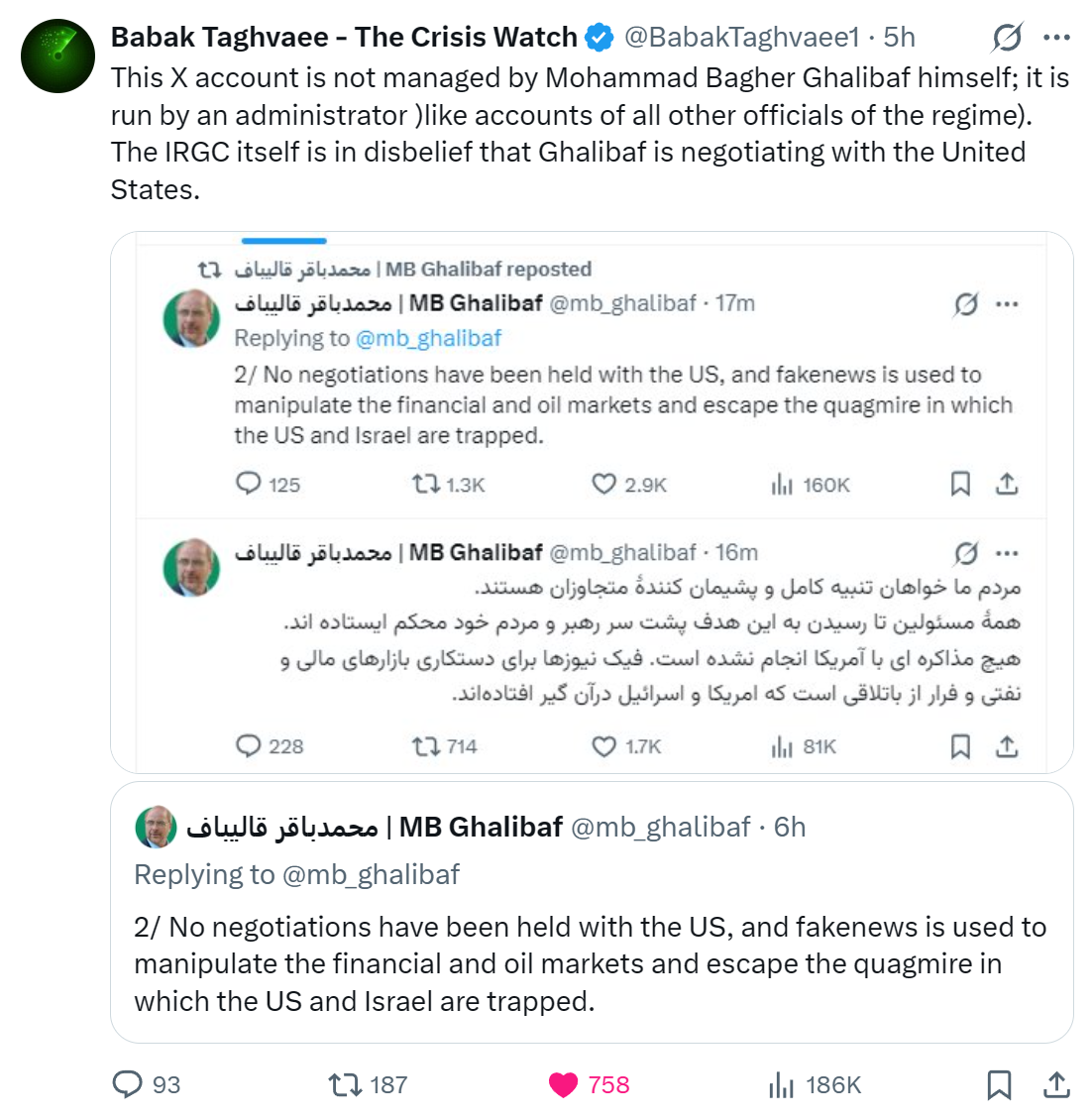
Following yesterday's leaks that American representatives were to meet with Iranian delegation led by Ghalibaf in Pakistan's capital, Islamabad, the media of the world circulated Ghalibaf's denials posted on X.
However, as one of Iranian journalists in exile in Europe observed, the official X accounts of Iranian authorities are not managed by them directly but by social media admins, who may currently act on orders of the IRGC.
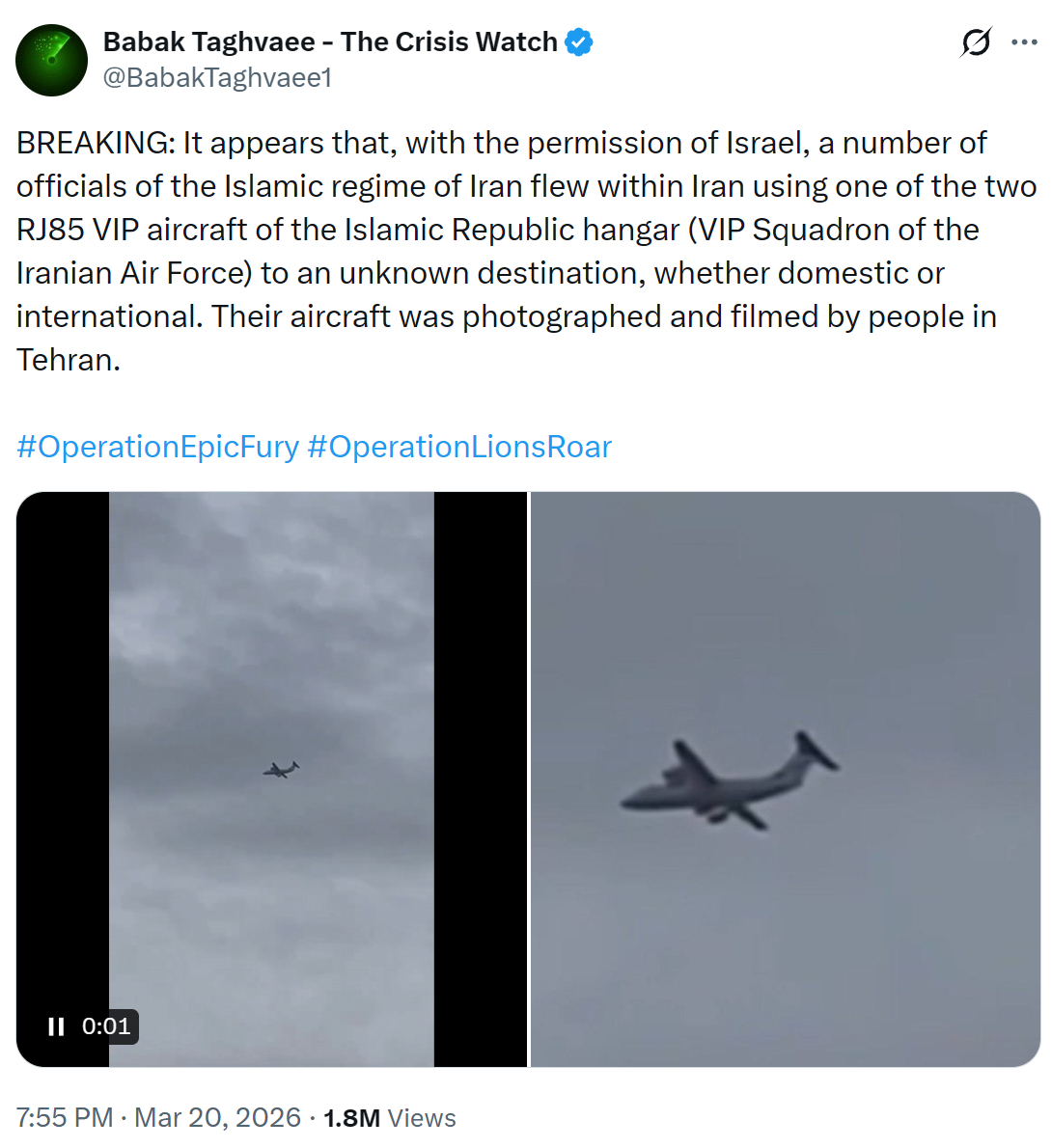
Earlier yesterday he reported an RJ85 air craft belonging to the regime taking off from Tehran – which could not have happened without Israeli and American permission, given the ongoing strikes.
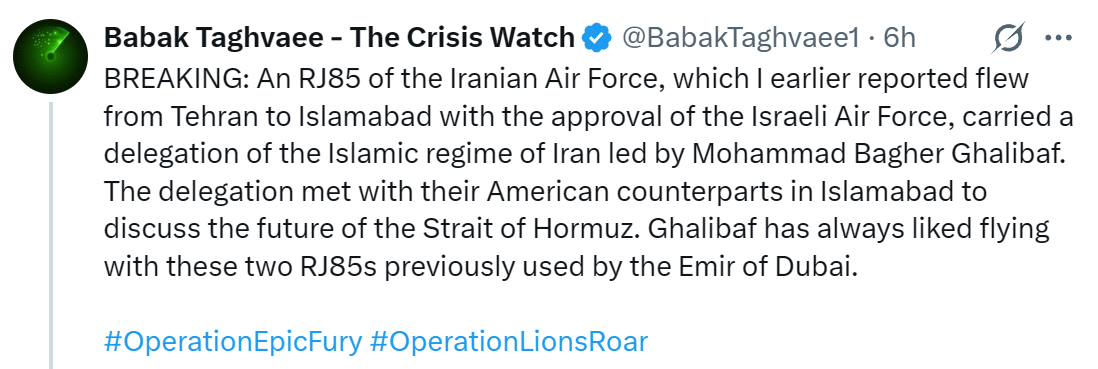
He followed up with a report that the plane was, indeed, heading for Islamabad and carried Ghalibaf on board.
All of this put together suggests an ongoing strife in the Iranian leadership, against the hardliners from IRGC, who appear to have seized most control, installed Mojtaba Khamenei as a puppet Supreme Leader (who hasn't been seen or heard since the war started) and are now desperate to stay in charge, while more pragmatic politicians are seeking a diplomatic path.
Both sides are playing for time
Of course it is far too early to tell where it's all going to lead and the real influence Ghalibaf holds in the country – or whether he's genuinely interested in any deal at all.
And even if he is, it's one thing to act as the nation's representative, it's something else entirely to have all the men with guns obey your orders. So far, IRGC doesn't seem to be on board.
What's more, while some accused Trump of spreading false information about talks to buy himself more time and ease the pressure off energy markets – which is a perfectly legitimate tactic – the same can be said of Iranians. They may be feigning interest in diplomacy to catch a breather after three weeks of non-stop battering from the air.
Surely they could use a few days of calm to regroup, assess the damage, cement control over the population to prevent it from rebelling and then resume their harassment of neighbours in the Gulf.
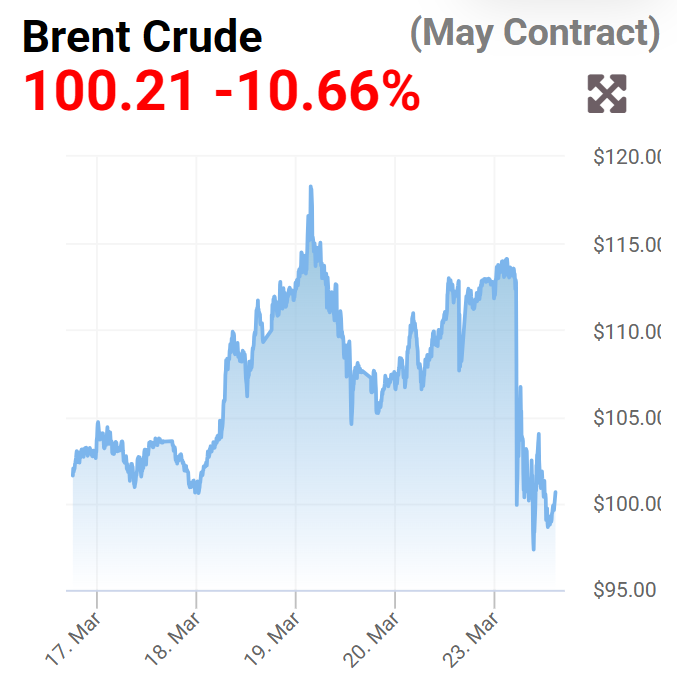
Trump has already scored a temporary win with oil dropping by 10% following the news, briefly sliding under $100 per barrel yesterday.
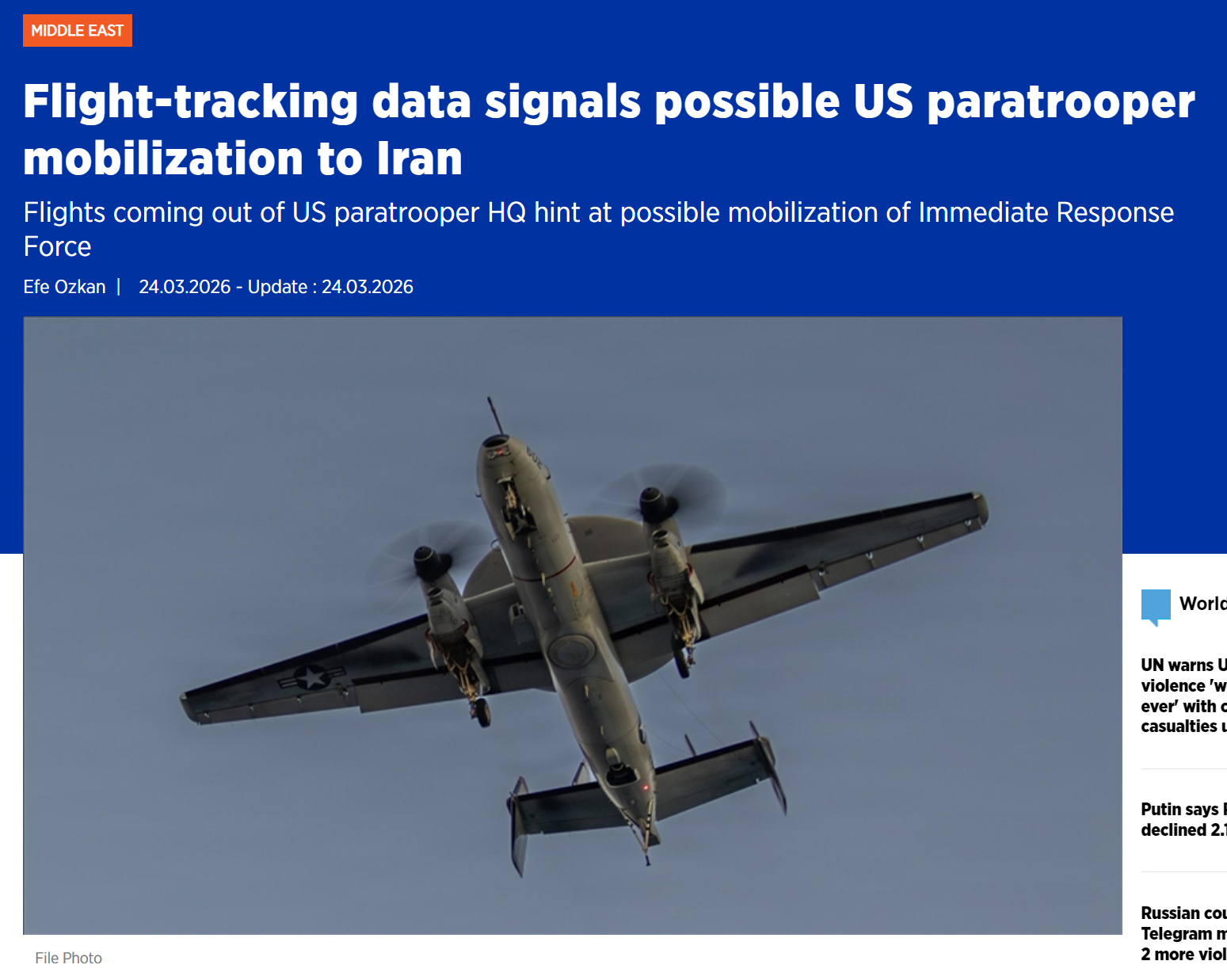
Meanwhile, after sending two amphibious assault ships, USS Tripoli and USS Boxer, for the Middle East – each carrying approximately 2000 marines with equipment – Washington appears to be deploying another 3000 paratroopers into the area.
Those few extra days bought by a promise of diplomacy could keep energy prices a bit lower, reducing pressure on Trump, while allowing the military to prepare for a potential ground assault on critical Iranian islands along the Strait of Hormuz, as well as the main petrochemical terminal on Kharg.
They could also be used for leverage in talks, showing that the US is serious about using boots on the ground if Iran doesn't cooperate.
Whatever happens I'm not holding my breath for a major breakthrough in the coming days, as neither side is under enough pressure to be desperate for a quick exit.
Three weeks of strikes is not enough to wear down the Iranians, even if some of them would like the war to end. Trump, on the other hand, needs this to be seen as his victory, so he cannot accept survival of the regime in completely unchanged form.
Like in Venezuela, he wants to entrench American presence in the region – and maybe even in Iran itself, with a stake in its oil and gas industry – a tough demand for people who have spent half a century chanting "Death to America!".


