



Finally, after 6 weeks of war, which has pushed global oil prices above $100 per barrel, allowing the regime in Tehran to recoup some of its losses, Donald Trump has decided close the Strait of Hormuz to all Iranian shipping.
Some people may not have been aware of this, but the strait hasn't been completely shut by Iran, which has continued to allow tankers carrying its own oil (usually bound for China) to still sail through it.
This meant that while other Gulf countries had to reduce their exports or shut them completely (like Kuwait, Qatar or Iraq), Iran not only kept selling as much as it did before, but made twice as much money from it.
It made approximately US$7 billion from sales of crude over the six weeks of war, compared to the usual US$3.5 billion.
There are a few reasons why the US allowed this to happen.
First of all, restricting Iran's oil shipments would add to the pressure on oil prices. China, which is practically its sole buyer, would have to get the missing 15% of its usual imports in the global markets, competing with other countries.
Allowing the flow of oil to continue added another ca. 60 million barrels to global supply since February 28. It helped.
Secondly, it's not wise to play all your cards at once. You have to have a few aces in your back pocket to increase the pressure on the adversary when it's needed. This is what Trump has done now, after the first round of talks failed.
He achieved a ceasefire, which neither side is interested in violating at the moment, but used a de facto non-lethal move of blocking the strait, without firing a shot. So, Iran cannot blame it for violating the truce (especially as it also blocked the waterway).
Trump has just flipped the script and forced Iran to become interested in unblocking the passage.
He also deprived it of the only leverage it believed it had on the US – rising energy prices.
Why now?
It was a smart decision to keep this option for later, even though it seems overdue. Many commentators have questioned the US administration for allowing Iran to make the most of the opportunity. Now we know it was not indefinite.
However, it's quite likely that Americans decided to wait for the starved nations in Asia-Pacific, which are the most affected by oil and gas shortages, to look for supplies in... the USA.
It seems too convenient to be an accident that Trump just boasted about a long queue of supertankers lining up to dock in the Gulf of Mexico to buy American crude.
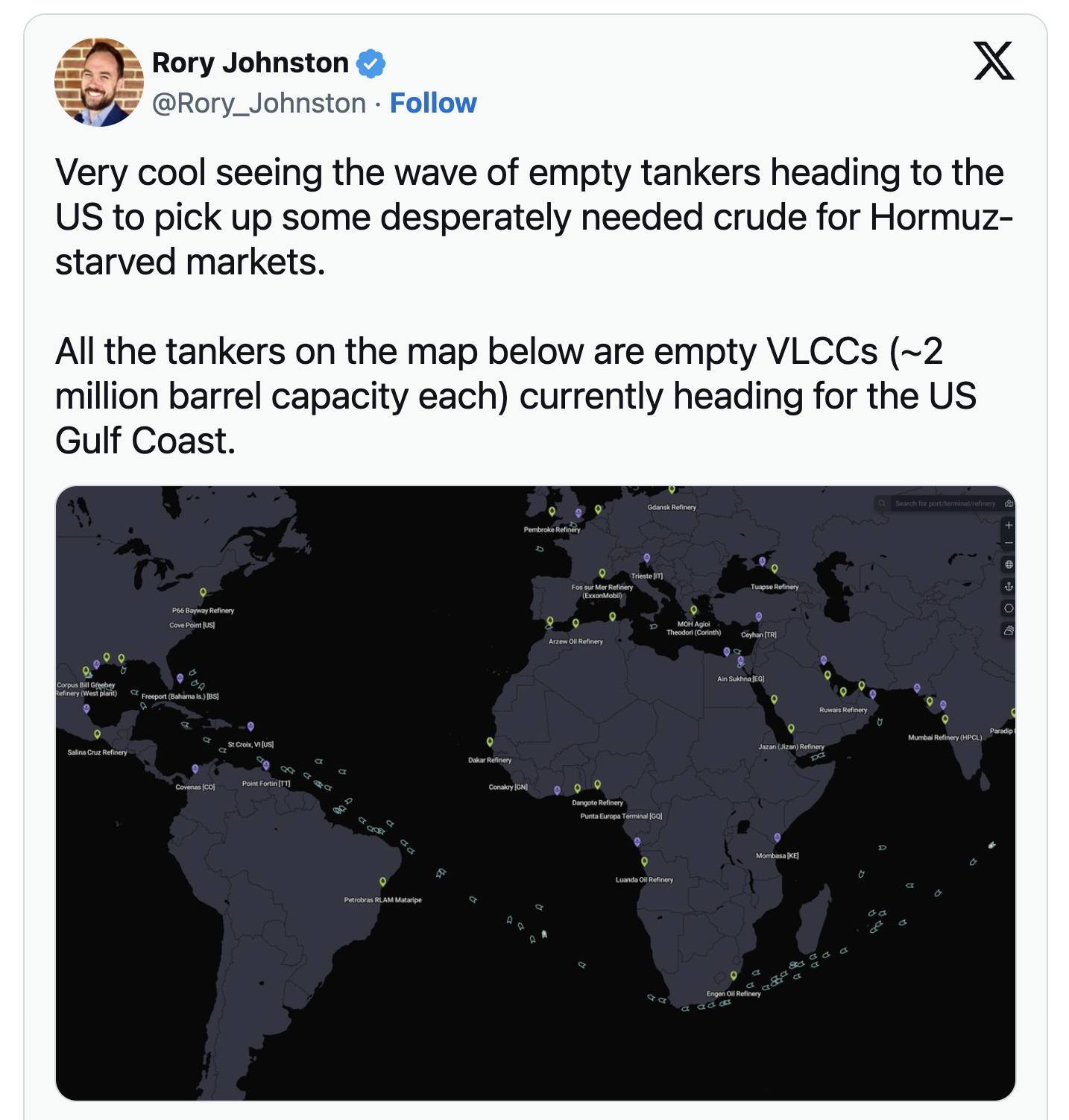
Had Iran's oil been blocked from China earlier, Beijing would have competed with its starved neighbours, making the crisis in Asia even worse.
But now, as oil – however more expensive – is about to make way to APAC from the US, Americans can shut the door on Tehran and watch it suffer.
China
This brings us to the final element of American game over Iran. Now that its oil is going to be sitting in port for god knows how long, Beijing is about to lose another 1/6th of its imports (in addition to what already has been disrupted).
This puts pressure on Xi Jinping to talk to Iran and step in like he, reportedly, already did to push Tehran to take part in the talks in Islamabad.
The stakes have gone up now – in the face of Iranian defiance, Trump has taken China's oil from Iran hostage, which compounds Beijing's problems as other imports from the Gulf have dropped as well.
Russia cannot meaningfully increase deliveries anymore due to lacking pipeline capacity. It would have to reroute tankers bound for other countries if it wanted to throw Beijing a lifeline.
Of course, China could choose to wait it out, as it has very large oil reserves, exceeding 1 billion barrels in public and private storage. On paper, then, it should be able to easily cushion a loss of a few million barrels per day for as long as a year.
However, this is easier said than done, as the bottleneck is logistics: the speed at which it can release oil, the specific types of oil (light or heavy, they have to be compatible with the refinery configuration) and the stockpile location.
Commercial stock, which China has just authorised the use of, can add only 1 million barrels per day. The bandwidth of the Strategic Petroleum Reserve is not precisely known, but it is likely to, at best, help bridge the gap of 3-4 million barrels lost in Gulf imports.
In other words, it's likely touch-and-go, and may even be enough to China into an oil shortage.
High energy prices already make it an expensive conflict, even for Beijing, but empty fuel pumps in the country would be a political embarrassment for the ruling party.
With Trump's delayed visit to Beijing coming in the next few months, Xi Jinping will tread carefully not to undermine the strategically important talks. Iran is not worth that sacrifice.
At the same time, pushing it into a corner may be rewarded by the US president when the world's two most important leaders meet.
With a single move, Donald Trump has opened up a new range of possibilities to end the war on his terms and force China to abandon its regional ally to cut a better deal with Washington.


