



One topic is surprisingly missing from the heated discussions about the war in Iran: why did it break out at this moment? Sadly, if you ever wanted evidence of how full of clueless people the world is, it is the idea that a violent confrontation with the extremist regime was avoidable.
In reality this war is just an inevitable consequence of the events of the past few months and years, following the events of the past few decades, all influenced by the events that are about to take place in the near future.
First of all, this is not really America’s war – it is Israel’s war, which the US judged prudent to join in order to maximise the damage inflicted on the Iranian regime. That made it an opportunity which was hard to ignore.
But Israel would act with or without America's help. It had to, because its archenemy, the one swearing it would one day wipe the Jewish state off the map and was pursuing weapons of mass destruction to achieve it, was down on its knees.
Regardless of who governed Israel, failing to seize the strategic opportunity would amount to criminal negligence by the country’s leaders, as another may not arise for years if Iran were allowed to rebuild its regional influence and military capabilities.
After nearly half a century of threats and sponsoring terrorist networks across the Middle East, Iran overplayed its hand by greenlighting Hamas' attack on Israel on October 7, 2023.
Following two years of brutal war, Gaza lies in ruin, with Hamas largely defanged and currently considering disarmament under international pressure.
What's more, the war had dragged another Iran ally, Hezbollah, into the fray, prompting another IDF incursion into Lebanon – only this time Israel was no longer pulling any punches. It bombed Hassan Nasrallah and the organization's leadership into oblivion, while its cunning pager attacks put thousands of fighters and officers out of commission, leaving the door open for the military and the Lebanese Army to largely (even if not entirely) disarm the group.
The threat of Hezbollah’s arsenal of up to 200,000 rockets – which served as Iran’s insurance policy, as they could saturate Israel’s air defences in the event of war – was neutralised.
Fortuitously, the rapid advance of opposition forces in Syria forced Bashar al-Assad to flee in late 2024, depriving Iran of a friendly regime in Damascus, cutting off the logistical routes it used to bring weapons into Lebanon.
Within 2.5 years, Iran saw its painstakingly crafted network of proxies unravel. No longer could they threaten Israel and restrict its freedom of action against Tehran.
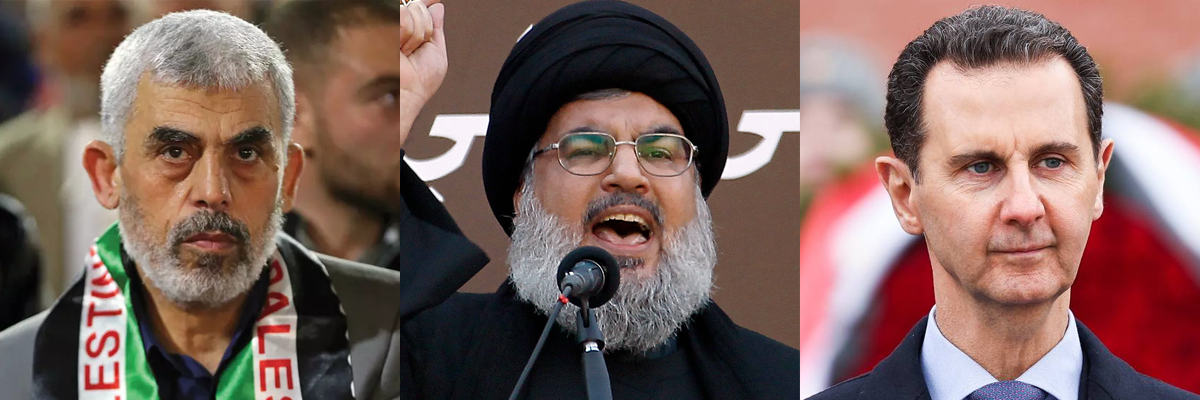
Decapitation of both groups opened up an opportunity for a direct strike against Iran, as Israel did in June of last year, soliciting American help to bomb the nuclear site in Fordow with bunker buster munitions that only the US could deploy.
But it was never going to be enough.
The regime was busy rebuilding the facilities hit, the stockpile of highly enriched uranium remained in its hands, and the ballistic missile programme was back in full swing as shipments of thousands of tons of rocket fuel precursors arrived from China.
While the 12-Day War set the Iranian nuclear programme back by several years, it is the ballistic missiles that came into focus next.
Unlike its nuclear venture, Iran's missile industry is quite a successful one and if it produced enough of them it could tip the scales in favour of Tehran as air defence interceptors capable of protecting both Israel and Iran’s regional neighbours are not easy to produce in sufficient numbers, even by the US.
With thousands of ballistic missiles it would at one point become immune to external attacks by threatening to overpower defences of any country in the region and rain indiscriminate destruction on their cities.
It was a risk that authorities in Jerusalem could not tolerate – especially as the regime had already been knocked down.
However, as Israel is a democracy it operates on a schedule of elections held every four years.
The next one is slated for October, with the polls predicting a similar crisis that the country already suffered between 2019 and 2022, when repeated elections failed to produce a stable governing coalition until the ultimate return of Benjamin Netanyahu with a collection of exotic far-right allies, who managed to cobble together the necessary majority.
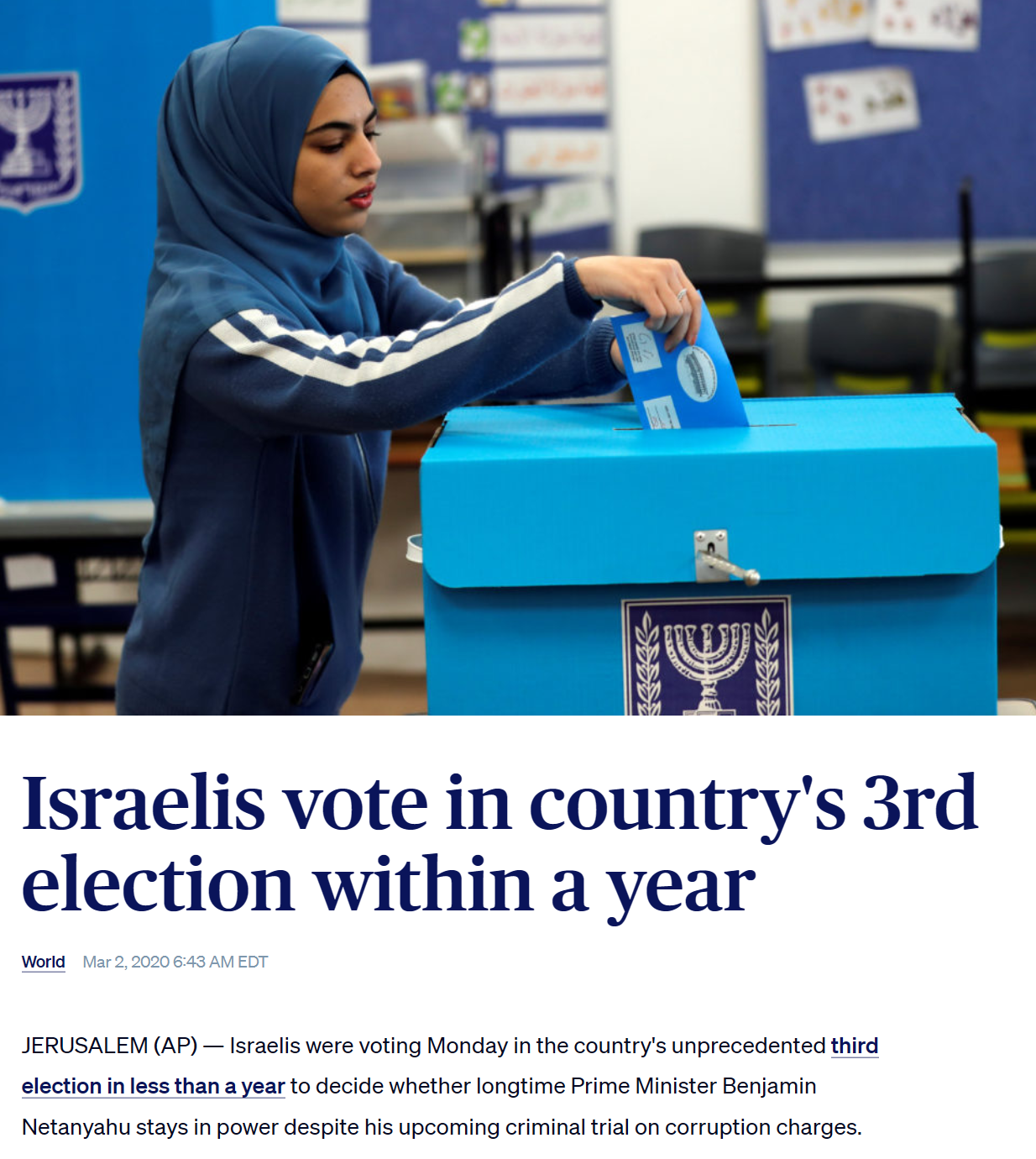
As neither the government nor the opposition could be certain of victory in 8 months time, the window of opportunity for another strike on Iran was closing quickly, before Israel would likely be plunged into political paralysis that could put such plans on ice.
For Netanyahu, who is turning 77 this year, it could be the last opportunity to deal a historic blow to the regime before he's sidelined politically for the next term or even forced to retire, given his advancing age and legal problems at home, which his enemies are trying to use against him.
Of course, if he succeeds it would provide the much desired boost at the end of the electoral campaign, which could keep Likud in power for another 4 years.
The opportunity was further strengthened by widespread protests among Iranians themselves. The nation came out in great numbers to protest against the incompetence of the mullahs in December and January, which led to one of the most brutal crackdowns in recent history, with likely tens of thousands of protesters killed.
All of these elements – the regime's proxy network lying in ruin, the successful military campaign last June, the political timelines in Israel and the street protests across Iran have aligned at the start of 2026.
Israel was not going to pass up on this opening as it could not permit Tehran to rebuild the missile capabilities already crippled last year.
It's a non-negotiable, existential matter for the Jewish state.
The only question was: when exactly to strike?
Intelligence provided the date: Iran's top officials, including the Supreme Leader, would be gathering for a meeting in Tehran on the morning of February 28.
Washington had little choice
Of course, going it alone would be less effective than getting the most powerful military on board as well. Netanyahu probably didn't need to do much convincing given that sitting this one out was a politically dangerous choice for Trump.
The "imminent threat"
There has been much controversy about the statements coming from the White House that Iran posed an "imminent threat" to the US or even suggestions that it would strike Americans first.
This should not be seen as an Iranian plot to suddenly and surprisingly attack the USA, but rather that their plan was to target American installations and people in the region in retaliation for another Israeli campaign.
As ever it's best to look closely at what Marco Rubio articulates in his public statements, because they tend to reveal the actual policy which Trump's bluster often drowns out from media reports:
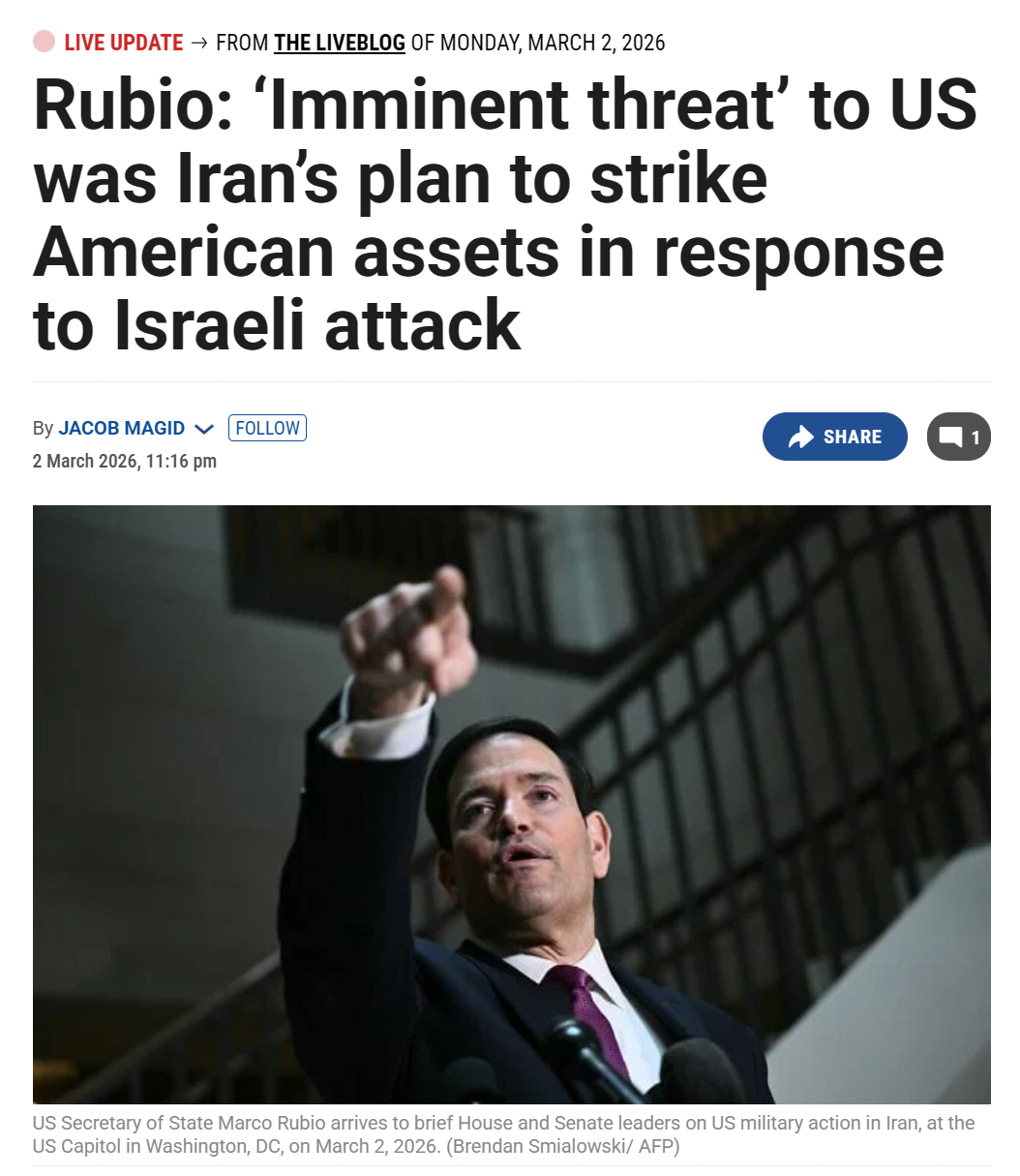
The events unfolding since the war started seem to confirm that this risk had existed, given how Iran ended up bombing its Arab neighbours more than Israel itself.
People who have no qualms about murdering thousands of their compatriots demanding nothing else than a better life, surely don't care about hurting everybody else as they go down themselves.
Which is why they attempt to set the region on fire – and which is why it would likely have happened no matter what.
Even if the US had stayed on the sidelines, the regime's actions would inevitably force Washington to respond anyway.
However, had the US not prepared in advance it would take weeks for its aircraft carriers to be moved to the Middle East while the war was raging on.
It would give Tehran time to do much more damage, giving Trump's critics ammunition to lambaste him for lack of foresight or being blindsided by Netanyahu.
It made far more sense to join Israel and decimate Iranian launch capabilities within the first few days, than permit the mullahs to cause far more destruction before the US military could intervene.
Militarily, then, it was no choice at all. The US could sit back and watch but at a high risk of being forced to respond when it wasn't prepared, or it could take the lead and shape the war from the beginning, hand in hand with the IDF.
There must have been certain political considerations as well.
Getting rid of Maduro in January was a huge accomplishment, met with much applause among Hispanic voters. Decapitating Iran in the same year, with Congress heading for the midterms in November, would surely boost Republican ratings – especially as Democrats are remembered for their negotiations with the murderous theocrats.
Strategically, it would also be a punch in the face of both China and Russia, potentially putting control over Iranian oil in American hands, preventing Beijing or Moscow from ever using the threat of upheaval in the Middle East against the US and the civilised world again.
Donald Trump had little room to manoeuvre:
- Israel was not going to back down, because it had no time left.
- The US was likely to be dragged into war anyway.
- If US forces were attacked by Iran in response it would be a slap in the president's face. He would be accused of lack of coordination with Netanyahu putting American lives at risk.
- If Iran started striking neighbours – as it has – American response would be delayed by a few weeks, putting Iran in a much stronger position.
- Widespread protests in the country made regime collapse more likely.
- Even if it didn't, it would be greatly weakened, which could be enough to sell the war as a victory in an election year. Especially following Maduro's capture.
After half a century of ‘Death to America’ and ‘Death to Israel’, after thousands of Americans were killed and maimed by Iranian proxies, Tehran’s own mistakes had created the long awaited opening for a decisive military campaign against its military capabilities – or even the existence of the regime itself.


